


Year : 2014
Style : Hard Rock
Country : Germany
Audio : 320 kbps + scans
Size : 93 mb
Bio:
Hard Rock band from Osnabrück / Germany.Listening to Morphine now, in whatever present tense one happens to occupy, can be an exercise in bittersweet nostalgia. It doesn’t have to be. The band’s sixty some-odd songs, recorded between 1991 and 1999 by Mark Sandman and a close coterie of musical enablers from the greater Cambridge area, aren’t necessarily of a particular time or genre. There was no ’90s low-rock movement, no nexus of guitar-less trios with saxophone, no prevailing trendline that would reasonably account for the many Sandband iterations, of which Morphinea trio with Dana Colley on saxophone and two distinct drummers, first Jerome Deupree, then Billy Conway, and finally both Billy and Jerome — was the most prominent. There was just what, in retrospect, was a far too brief period of timelessness during which Mark seemed to have figured out how to make a living playing music with his friends in a manner that retained its gripping soulfulness, alluring eccentricity, and complex simplicity.Famously, just about every major and quite a few minor labels deferred on Good, the band’s essentially self-produced 1992 debut. It got its first release through Accurate, a tiny indie curated by Cambridge jazz saxophonist Russ Gershon, a close Sandman ally, occasional Morphine sideman, and full-time member of Hypnosonics. Rykodisc reissued Good the following year when the Salem label signed the band and the trio, now featuring Conway behind the drums, geared up to deliver their breakthrough sophomore album: 1993’s Cure for Pain. But that doesn’t quite convey the level of determination it took to put Morphine on track, much less keep it there.Mark had been through the industry wringer with Treat Her Right, a blues foursome signed and dropped by RCA in ’89. Treat Her Right was a band without bass or even bass drum — just two guitars, harmonica, hi-hat, and snare. Mark managed the low end on guitar, courtesy of some pedal magic. You can hear hints of “Thursday” in the sly refrain “I Think She Likes Me,” and sense something special in the hip-outsider, steeped-in-cool vibe Sandman projected in Treat Her Right. The building blocks for Morphine were shifting into place.What came through at the other end of Treat Her Right’s near miss wasn’t just a musical inversion favoring the low end, but a clearer vision of how to manage inherent tensions between commercial realities and creative autonomy. There were little things that, over time, made a big difference as Morphine found and connected with its audience. Rather than accepting invitations to open for more established acts, Morphine chose multi-night residencies headlining smaller venues, a strategy that put the band in front of Morphine fans and gave Sandman, Colley, and Conway time to linger before moving on.On most nights, Sandman would subvert the conventional encore routine, slyly breaking the fourth wall to bring fans in on the charade. He’d float the option of leaving the stage, explain why that really wasn’t necessary, and wryly dismiss it. “That’s the show… Now for the bonus songs… No extra charge,” Mark Hamilton, friend and former road manager remembers Sandman saying. Skipping the pretense left more time for music. It was convenient for the band as well.Artistically, Cure for Pain was a kind of vindication. Of course, you could have a rock band without guitar! Suddenly, it was surprisingly obvious, especially to the dozens of talent scouts who’d initially passed on Morphine.Sandman was among a handful of early-’90s indie subversives who pushed, incrementally, at the boundaries of what worked commercially. In 1993 alone, three other artists with ties to Boston — Kim Deal, Tanya Donelly, and Lou Barlow — also produced landmark albums with the Breeders, Belly, and Sebadoh, respectively.In retrospect, the transition to Morphine for those on the outside appeared seamless and surprisingly short. But that wasn’t the case. Back in 1991 at the Plough and Stars, the tiny yet legendary Cambridge bar that had been an incubator for Treat Her Right, and a few blocks away upstairs at the Middle East, Mark was in alchemy mode. He convened monthly residencies with a close knit group of compadres from which Morphine emerged gradually, an organic distillation of the best elements from several distinct Sandbands.The Hypnosonics was Mark’s version of a dance-party band, replete with a horn section — Earth Wind & Fire brought way, way, down to earth. Treat Her Orange was a rootsy collision between blues and bluegrass courtesy of Blood Orange’s mandolinist Jimmy Ryan, who turned up on Cure for Pain. There was Supergroup, a context for Sandman and future President of the United States of America frontman Chris Ballew to experiment with guitars strung non-traditionally and songwriting that incorporated audience participation. Various other Sandband lineups could materialize on any given weeknight, at multiple venues within walking distance of Mark’s legendary Norfolk Street loft.A few words about Cambridge in the ’90s: It is a place that no longer exists. Maybe it never really did. That’s the essence of nostalgia. In the early-’90s, you could still get a haircut and a straight-razor shave at Joe’s barbershop on Prospect, just a few blocks away from the loft that housed Sandman’s Hi-n-Dry recording studio. On the 30-minute walk from MIT to Harvard, you’d pass roughly a dozen used record and book shops without running into a single Starbucks. Central Square, still deemed a tad sketchy by some back then, became a perfect mecca for Boston’s restless music scene.On most nights, if you couldn’t find a spot on the street (a rarity), there were two free city lots across from the Middle East and T.T. the Bear’s Place and, next to Charlie’s Tap, a municipal garage on Green Street that charged something like 35 cents an hour. Ample parking, somewhat reasonable rents, a T stop and a handful of local clubs is the stuff dream scenes are made of.Morphine occupied a space both within and above that scene as the ’90s crept by and the Rykodisc deal gave way to something much bigger with DreamWorks. Suspended between the defensive provincialism that had prevailed for decades among the city’s cloistered neighborhoods, and successive rounds of aggressive gentrification that would transform Central Square and its surroundings into a generic urban everytown, Boston was on the precipice of big changes as well.Somehow, Morphine managed to transcend Boston without ever leaving Cambridge — impressive in and of itself, but totally in keeping with who Mark was. When they weren’t on tour, you would often find him out and about, sometimes hanging, sometimes playing, sometimes doing both. Or he would be holed-up at his loft and studio, Hi-n-Dry, where friends would drop by for impromptu jams that would often last well into the evening. For a couple years running, Morphine spent New Year’s Eve playing on the tiny stage upstairs at the Middle East. Just a month before Mark would take his final breath on stage at a festival show in Italy, he had the opportunity to gaze out at a crowd gathered on a roped off section of Mass Ave to see Morphine headline the Central Square World’s Fair.The week before he left town, he brought a cheap Radio Shack organ to the Plough and Stars to sit in with the Ray Corvair Trio, a local surf band. Mark left me a voicemail about that gig on a Monday afternoon, inviting me to come by. Never mind that Morphine would be decamping for a European tour in just a few days, he seemed particularly excited about the crazy sounds he got running the keyboard signal through a Memory Man delay. I was packing for a trip to the Montreal Jazz Festival and figured I’d have many more opportunities to catch-up with Mark or see him play with one of his projects, so I didn’t go. I kept his message for a year or so and would listen to it from time to time.A lot has been made of Morphine’s blissfully guitar-free palette, and too much as well. It’s probably fair to say that Mark both loved and hated it. He flourished stylistically in the open spaces that two strings created, while chafing against its apparent novelty as a selling point, the lead to every story. But it worked. It complemented his voice. And it opened up big spaces for Colley and Conway to lock into a groove with Sandman and then transcend it. For all the low-key talk attached to the trio, in action, on stage Morphine grooved. In fact, for all their alt-rock cred, it wasn’t entirely surprising when the band was tapped to join the jamband-centric H.O.R.D.E. tour in 1997.Low-rock purity aside, guitar worked pretty well for Morphine, as did organ, piano, cello, mandolin, and any other instrument Mark introduced to the mix. Listen to Good and then skip ahead to The Night. It’s hard not to take note of the distance Mark traveled with Morphine in just under a decade without losing hold of that unifying vibe, from the bluesy bass-driven swing of “The Saddest Song” to the nearly bass-free tone poetry of “The Way We Met” and the Middle Eastern modalism of “Rope on Fire.” He was in the process of piecing it all together, of weaving his various musical alter-egos into what Morphine could become, when the terrible news arrived from Italy.Mark was making music well before the alternative ’90s arrived and his songs outlived the era. They weren't tied to any particular genre or rooted in a specific subcultural trend. His creative approach and the sonic palette from which he drew were too eclectic to be neatly classified. At his loft, deep cuts from his favorite Prince albums would be in heavy rotation, possibly with some West African blues or Medeski, Martin & Wood mixed in, maybe some Bo Diddley or a track from Egyptian singer Umm Kulthum. He listened broadly and intently, tending toward the timeless, the soulful, the elusive. Those qualities persist in the recordings he left behind, the possibilities they hint at, and the passion they continue to evoke.
Album:
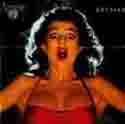
“We sold our soul to the devil for rock ‘n’ roll...” goes the lyric from the song “The Devil You Know” by the Osnabrück-based hard rock band Bulletride. This charismatic band lives and breathes this motto and has dedicated itself 100% to rock ‘n’ roll. 2014 is shaping up to be the year for Bulletride. The band’s debut album, *Morphine*, is set to be released shortly. To date, the band has made a name for itself through its explosive live shows and has been a hit with audiences thanks to its signature rock ’n’ roll sound.
Line Up:
Maximilian Witte - Vocals
Raphael Aufderlandwehr - Guitars
So-Kumneth Sim - Guitars
Nicolas Brinkhege - Bass
Arne Mattick - Drums
Tracklist:
01. Dead Man
02. Bulldozer
03. Death Train
04. The Road
05. Morphine
06. The Devil You Know
07. World Coming Down
08. Into the Fire
09. Bright Light
10. Black Star Rider


Download links for all albums only on our blog here: http://goodmetalandhar.do.am/
